Loading...
Serving Port Orange, FL and surrounding areas. (386) 518-4720
Room additions, screen enclosures, and decks need footings sized for the ground underneath - not just any ground. We pour concrete footings in Port Orange sized for sandy coastal soil, permitted through the city, and inspected before a single board goes up.
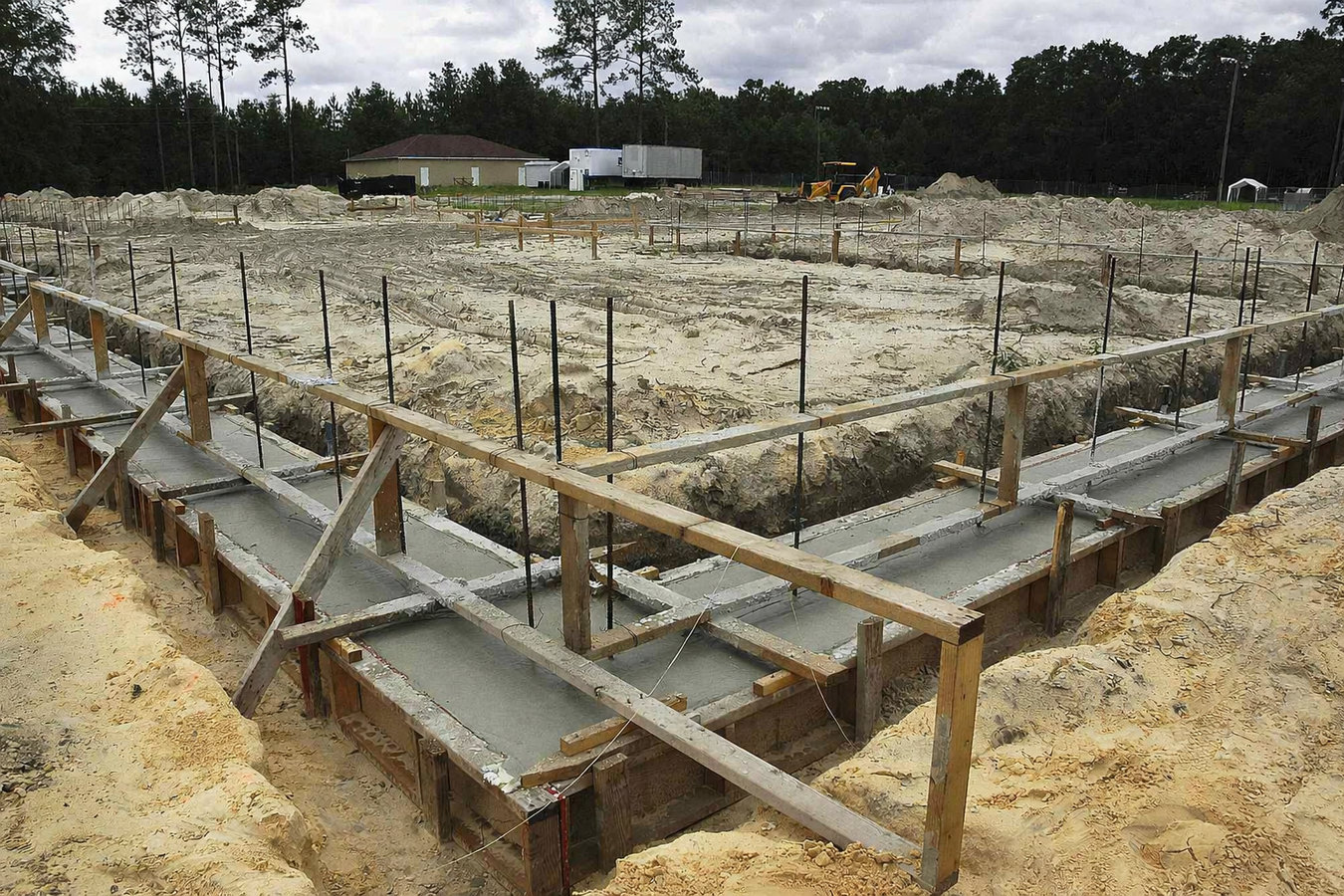
Concrete footings in Port Orange involve digging to the permitted depth, placing steel reinforcement, pouring the concrete, and waiting for the inspection sign-off - most residential footing jobs take one to two days of active work, with three to seven days for curing before framing begins.
A footing is the underground base that holds everything above it - your addition walls, a deck, a screen enclosure frame, or a pergola column. In Port Orange, where sandy coastal soil compresses under load, the footing has to be sized for the actual ground conditions at your site. A footing that was adequate in a different soil type can settle unevenly here, causing cracks in walls, doors that stick, or a structure that slowly pulls away from the main house over time.
Footing work is the foundation of any bigger structural project - and when an addition is also getting a full foundation installation, the footing and foundation work get coordinated in sequence so the project moves forward without concrete being poured twice.
Any new structure attached to or built near your home needs its own footing - it cannot just rest on the existing slab or tie into the original foundation without support underneath. In Port Orange's sandy soil, this is especially important: a structure built without a proper footing will settle unevenly and pull away from the main house over time. A footing is the first step, not an optional one.
Diagonal cracks running from the corners of doors or windows, or cracks in a concrete slab that seem to grow over time, are often signs that the structure underneath has shifted. In Port Orange's loose sandy soil, this kind of settling happens when a footing was undersized or poured without adequate reinforcement. If you are seeing new or widening cracks, the footing is worth investigating before the problem gets worse.
When a structure settles unevenly, the door and window frames go slightly out of square - and doors that used to swing freely start sticking or will not latch. This is one of the earliest signs of footing failure or inadequate support. It is easy to blame humidity (also common in Florida), but if it is happening in a newer addition or outbuilding, the footing is worth a look.
Deck posts and pergola columns need individual footings beneath them - not just a post set in the ground. Port Orange's high water table and sandy soil mean that posts set without proper footings will rot, shift, or lean within a few years. If you are planning any outdoor structure with vertical posts, ask your contractor specifically about the footing plan for each post location before work begins.
We pour concrete footings for room additions, screen enclosures, decks, pergolas, detached garages, and fence lines throughout Port Orange. Every project starts with a site visit to assess the soil conditions at your specific location - not a standard depth pulled from a chart. After the permit is in hand, we call 811 to have underground utilities marked before any digging begins (required by Florida law), excavate to the permitted depth, set steel reinforcement inside the forms, and pour the concrete in one continuous operation. The footing is then inspected by the city before we proceed to the next phase. That inspection is your protection - it confirms the work meets local standards before it is buried and built on top of.
For homeowners adding a larger structure - a room addition with an exterior wall, for example - footing work often sequences directly into a foundation installation project. We coordinate that work in the right order so the footing is poured, inspected, and cured before the foundation walls go in. A single contractor handling both eliminates scheduling gaps and ensures nothing has to be torn out and redone.
For room additions and attached structures - runs under the full perimeter of the new walls to spread the load evenly across Port Orange's sandy ground.
For deck posts, pergola columns, and fence post lines where individual footings are needed at each load point.
For Florida rooms and lanai enclosures - a common project in Port Orange given the climate - sized and spaced per the enclosure manufacturer's requirements.
For 1970s through 1990s Port Orange homes where the original footings were built to older standards and a new addition needs independent support rather than tying into what is already there.
Port Orange grew very quickly from the 1970s through the 1990s, and a large share of the housing stock - in neighborhoods along Dunlawton Avenue, near the Spruce Creek area, and throughout the established subdivisions - is now 30 to 50 years old. Many of those homes are at the stage where owners are adding screen enclosures, back additions, and detached structures. The challenge is that Port Orange sits on sandy coastal plain soils that compress more easily than most homeowners expect. The American Concrete Institute provides standards for footing design that account for local soil bearing capacity - and those standards matter here more than they would on firmer ground. A footing poured too shallow or too narrow for Port Orange's sandy conditions will settle over time, pulling the structure above it out of square.
The water table is also a real factor in many Port Orange neighborhoods, especially those near the Halifax River watershed. After heavy rain, groundwater can seep into footing trenches before the pour. We work on footing projects throughout Port Orange and in nearby communities facing the same conditions - including homeowners near New Smyrna Beach and Deltona, where sandy soil and seasonal water table changes create the same set of site challenges.
Call or submit a request and we will get back to you within one business day. We schedule a site visit before giving a firm price - footing costs depend on what is actually in the ground at your location, not just the size of the structure above. No pressure to book.
After you approve the scope and price, we submit the permit to Port Orange's Building Division and call 811 to mark underground utilities before digging. Both steps are required - we handle the paperwork and coordinate the timing so your project stays on schedule.
We dig the trench or holes to the depth on the permit, set forms to shape the concrete, and place steel reinforcement inside. A city inspector may visit at this stage to verify depth and rebar before the pour - your contractor schedules that visit. This inspection is built into the process, not an add-on.
We pour the footing in a single operation and let it cure - three to seven days in Port Orange's warm climate before framing can begin. Once it passes the final inspection, we give you the documentation showing the work was done to code. That record protects your home when you sell or file a claim.
No pressure, no obligation - just a straight answer on what your project will take and what it will cost.
(386) 518-4720We pull every permit through the City of Port Orange Building Division before any digging begins. That means your footing is inspected before it is covered up - a city inspector confirms the depth and reinforcement meet local standards. The documentation you receive protects your home's value and prevents unpermitted-work surprises at resale.
Port Orange's sandy coastal soil compresses more easily than the soils contractors encounter elsewhere. We assess your specific site conditions during the on-site visit and size the footing accordingly - not to the bare minimum, and not based on what we did on the last job in a different neighborhood. This is the main reason our footings do not settle.
Parts of Port Orange - especially near the Halifax River watershed - have a water table that can complicate footing pours. We have managed trench dewatering and adjusted pour timing on sites across Port Orange, including in Volusia County neighborhoods where this issue comes up regularly. You will not be our first call in a wet-site situation.
You can look up our Florida contractor license through the DBPR at myfloridalicense.com in about two minutes. A licensed contractor carries required insurance and workers' compensation coverage - which protects you if anything goes wrong on your property. Ask for any contractor's license number before signing anything.
Every footing we pour in Port Orange is permitted, inspected, and sized for the soil at that specific site. That combination of local compliance and proper engineering is what keeps additions, decks, and screen enclosures standing straight through years of Florida weather.
If your existing structure has already settled, foundation raising corrects the level before new footings are tied in.
Learn moreFor room additions and new structures that need a complete foundation system built above the footings.
Learn morePermit processing takes time - reach out now so your footing is ready before your framing crew arrives.